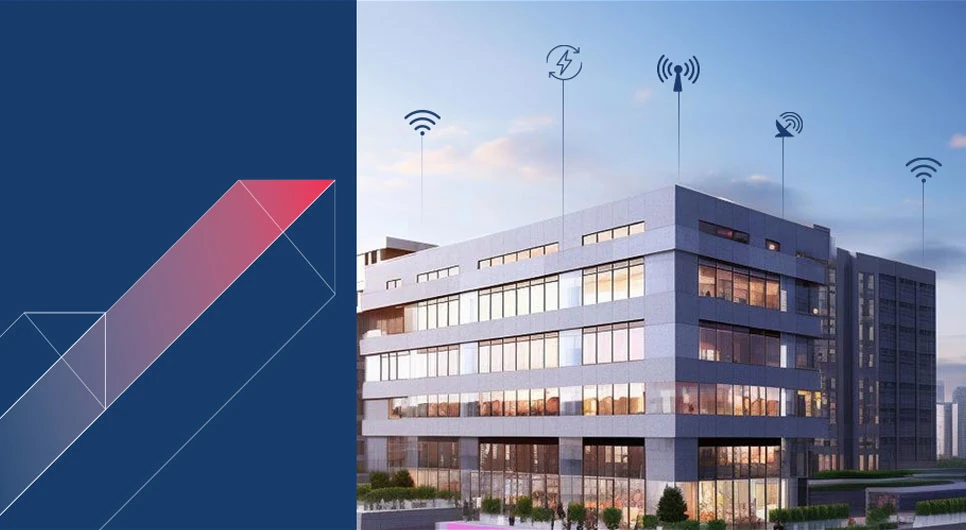


Smart Buildings Do Not Start with Smart Applications. They Start with the Network.
July 29, 2026
By Avinash Deepak — Board of Advisors, iBUS Networks
Smart-building conversations often begin with applications: visitor apps, energy dashboards, access-control platforms, AI cameras, parking systems and occupancy sensors. These solutions are useful. But they are not the starting point. A smart building begins with reliable, integrated digital infrastructure.
The Foundation Comes First
Every smart-building application depends on the network beneath it. If Wi-Fi coverage is inconsistent, mobile signals are weak, systems operate in silos or connectivity fails during peak demand, even the best application will deliver a poor experience. This is where many smart-building programmes struggle. Technology gets added building by building, floor by floor and vendor by vendor. Over time, the property ends up with multiple networks, separate dashboards, duplicated infrastructure and limited visibility across systems. The result is complexity without intelligence.Connected Is Not the Same as Intelligent
A building may have cameras, sensors and digital systems, but that does not automatically make it intelligent. An intelligent building should collect information from multiple systems, process data in near real time, identify patterns and risks, support faster decisions, improve user experience and adapt as requirements change. This needs more than individual applications. It needs a common digital foundation that allows systems to communicate, scale and operate securely.The Problem with Application-First Thinking
- • Fragmented infrastructure: Different systems may use separate networks, vendors and maintenance models. This increases cost and makes troubleshooting difficult.
- • Inconsistent user experience: A premium building may offer a sophisticated app, but users will still be dissatisfied if calls drop, video meetings fail or Wi-Fi is unreliable.
- • Limited scalability: A system designed for one use case may not support future applications such as AI analytics, digital twins or edge computing.
- • Higher operating costs: Multiple networks, contracts and support teams create unnecessary duplication.
- • Data silos: Useful information remains trapped within individual platforms, preventing owners from seeing the complete picture.
Build the Digital Spine
A better approach is to create a common digital spine for the building. This typically includes strong indoor mobile connectivity, enterprise-grade managed Wi-Fi, high-capacity fibre, secure network architecture, edge processing capability, integrated monitoring and common data layers. Once this foundation is in place, applications can be added faster and operated more effectively. Security cameras can support safety as well as operational intelligence. Occupancy data can improve space planning and energy use. Wi-Fi can support connectivity while enabling anonymised movement insights. Parking, access and visitor systems can work as part of one connected journey. The value comes from integration.Infrastructure Must Be Planned Early
Digital infrastructure should be planned with the same seriousness as power, water, fire safety and air conditioning. It should not be treated as an afterthought or fitted only after construction is complete. Early planning helps developers reduce retrofitting costs, avoid duplicate infrastructure, improve technology readiness, support future applications and create potential digital-service revenue opportunities. This is especially important for large campuses, business parks, malls, hotels, hospitals and integrated townships where multiple stakeholders depend on the same digital environment.From Smart Buildings to Living Networks
The next stage of building intelligence will be driven by networks that do more than carry data. These networks will continuously monitor performance, understand usage patterns, support local processing and help applications respond to real-world conditions. They will become living networks. A living network can help a building adjust to crowd levels, identify operational risks, optimise resources and support new digital services without constantly rebuilding the underlying infrastructure. That is when connectivity moves from being a utility to becoming a business platform.The Real Starting Point
The smartest application cannot compensate for weak digital infrastructure. Before choosing the next dashboard, sensor or AI solution, building owners should first ask: Is the underlying network reliable, integrated, secure and ready to support future demand? Because smart buildings do not start with smart applications. They start with a strong digital foundation.Connectivity is no longer only a utility. It is the operating layer of a modern building.
About the Author
Avinash Deepak is a member of the Board of Advisors at iBUS Networks. He advises technology, telecom and digital-infrastructure organisations on growth strategy, enterprise solutions, partnerships and go-to-market execution.Related Posts



November 20, 2025
TRAI Calls Out India’s Indoor Connectivity Blind Spot, Here’s How We Are Addressing It.
May 27, 2025
You have planned the classrooms, the courtyards, the curriculum. But what about the bandwidth?